
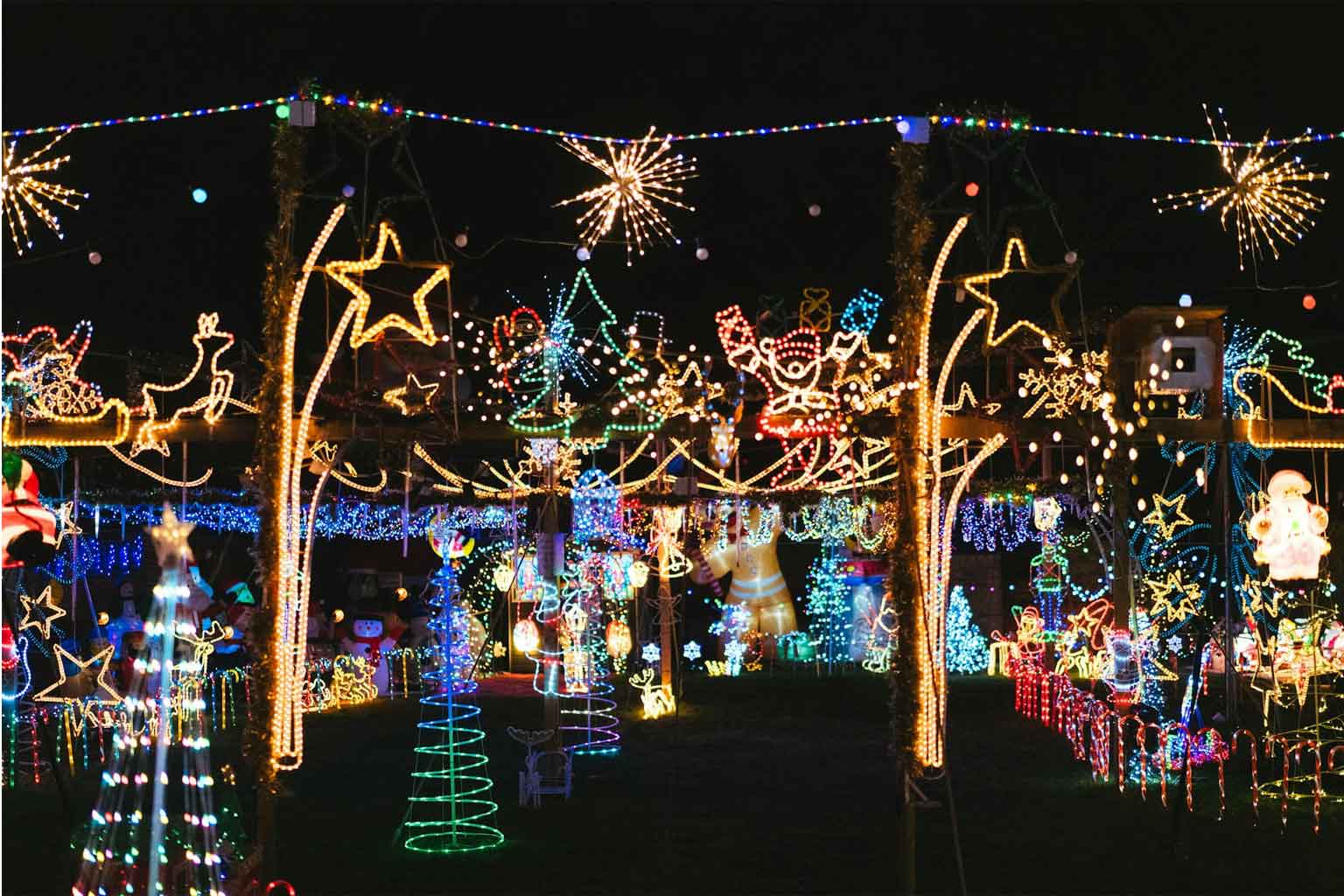
Holiday decorating in a shared community isn’t just about lights and lawn inflatables; it’s about balancing personal expression with the look, safety, and harmony of the whole neighborhood. Every year, Florida boards and residents ask the same questions about holiday decorating rules: How much can we decorate? Can the board say no to a menorah but yes to a Christmas tree? When do decorations legally have to come down?
Before getting into the specifics, let’s define a few terms that matter here.
HOA (Homeowners Association): A governing body that manages a residential community and enforces rules including, in many cases, exterior decorating guidelines.
Governing documents: The legal rulebook for a community, typically the Declaration of Covenants, Conditions & Restrictions (CC&Rs), Bylaws, and Rules & Regulations. These documents (not the board’s personal opinion) determine what is allowed.
Common elements/areas: Shared spaces like lobbies, clubhouses, and entryways that the association, not an individual owner, controls.
With that groundwork laid, here’s what boards and residents actually need to know before the lights go up.
Can an HOA Restrict Holiday Decorations?
Yes. HOAs can regulate the type, size, placement, and duration of holiday decorations if the rules are reasonable, consistently enforced, and written into the governing documents or properly adopted rules.
What associations typically can’t do is single out specific residents, apply rules unevenly, or ban all forms of holiday expression outright. Courts have generally viewed a total decorating ban as excessive and difficult to defend, even when a board’s intent is to avoid conflict.
Most communities land somewhere in the middle: lights and wreaths are fine, but there are limits on size, placement (balconies vs. common areas), and how early decorations can go up or how late they can stay up.
What Should an HOA Holiday Decorating Policy Cover?
A well-written policy answers four questions clearly, so no one has to guess:
- Where decorations can be placed (private balcony, front door, or yard, but not stairwells, hallways, or shared amenity spaces)
- What type and size of decorations are allowed (string lights vs. inflatables, height and lighting restrictions)
- When they can go up (many associations use the day after Thanksgiving as a starting point)
- When they must come down (often within one to two weeks after the holiday, or by a set January date)
If your community’s rules are silent on any of these, that’s usually where disputes start. Vague rules invite different interpretations, and different interpretations invite complaints.
Can an HOA Ban Religious Holiday Symbols?
This is where boards need to tread carefully. Communities today are genuinely diverse; residents may celebrate Christmas, Hanukkah, Kwanzaa, or nothing at all, and a rule that favors one tradition over another can create real friction, even unintentionally.
The safest and most defensible approach is content-neutral: rules based on size, placement, lighting, and timing, not on what a decoration represents. A well-drafted policy doesn’t say “no menorahs” or “Christmas trees only.” It says, “decorations may not exceed X feet” or “lighted displays must be turned off by 11 p.m.,” and applies that standard to everyone equally.
Courts have often recognized that symbols like Christmas trees and menorahs carry cultural as well as religious meaning, and the federal Fair Housing Act prohibits housing discrimination based on religion. Both point the same way: neutral, evenly applied rules tend to hold up better than outright bans on specific symbols.
Condo associations tend to keep common areas (lobbies, entrances) fairly neutral, while HOAs typically give homeowners more latitude to decorate their own private lots as they choose.
How Should a Board Handle Decorating Disputes?
HOA decorating disputes usually start one of two ways: a resident pushes back on the rules, or a neighbor complains about another resident’s display. Either way, boards have four reasonable paths forward, roughly in order of effort:
- Point to the existing policy. If the rule is written down, applied consistently, and reasonable, that’s usually enough to resolve the disagreement.
- Survey the community. Before changing anything, ask residents how they actually feel. This heads off the “the board just decided this on its own” objection.
- Form a decorating committee. Giving residents a voice in shaping the guidelines produces rules people are more willing to follow, and fewer individual complaints later.
- Update the rules through proper channels. For a Florida Homeowners Association, Chapter 720 of the Florida Statutes requires the board to adopt rule changes at a duly noticed meeting, with notice posted conspicuously in the community at least 48 hours in advance that identifies the agenda item. If the change affects how owners use or decorate their own parcel, notice must also be mailed, delivered, or electronically transmitted to owners and posted conspicuously at least 14 days before the meeting.
The boards that run into the fewest disputes are usually the ones that involve residents early, rather than issuing a rule and hoping it sticks.
What This Means for Your Community
Holiday decorating is genuinely one of the lower-stakes issues an association deals with all year, but it can escalate fast when rules are unclear, inconsistently enforced, or perceived as unfair. The fix isn’t a total ban, and it isn’t a free-for-all. It’s a clear, neutral, well-communicated policy that residents helped shape.
For boards juggling decorating policies alongside budgets, maintenance schedules, and everything else that comes with year-end, this is exactly the kind of detail an experienced management partner like KWPMC can take off your plate: drafting fair guidelines, keeping enforcement consistent, and making sure notice requirements are met so the rule actually holds up if it’s ever challenged.
Frequently Asked Questions (FAQs)
Q: Can an HOA fine residents for decorations that violate the rules?
A: Yes, if the governing documents authorize fines and the board follows the required process. In Florida, that means at least 14 days’ written notice and an opportunity for a hearing before a committee of at least three members who are not board members, officers, or employees (Fla. Stat. § 720.305).
Q: Do holiday decorating rules apply to balconies and patios?
A: Usually, yes. Most policies treat balconies and patios as visible exterior space, subject to the same size, timing, and placement rules as yards or entryways.
Q: Can residents put up decorations before Thanksgiving?
A: Only if the community’s rules allow it. Many associations set a specific start date, commonly the day after Thanksgiving, to avoid extending the season too early.
Q: What happens if a resident refuses to take decorations down?
A: The board typically issues a violation notice under the standard enforcement process, which can lead to fines or, in persistent cases, further association action as outlined in the governing documents.
Need help drafting or updating your community’s decorating policy or handling enforcement fairly and consistently? Since 2004, KW Property Management & Consulting has partnered with Florida boards on rule development, resident communication, and day-to-day association management. Get a proposal from KWPMC to see how we can support your community.